

NPSELECTION
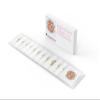
Starter Cultures for Homemade L.Salivarius and L.Reuteri Yogurt (Pack of 12 sachets)
CA$121.46
CA$202.43
-
 Order within to get between
 -
 Tracked Shipping on All Orders
-
 14-Day Returns
- Secure Payments
-
 24/7 Customer Support
Description
- Can be used with all kinds of yogurt making devices and whole milk for best results
- One sachet is enough to make 1 quart of plain yogurt and re-culture consequent generations
- Pure bacterial blend of cultures made in laboratory environment away from additives, maltodextrin, gluten and GMO
- Contains ''Lactobacillus Bulgaricus'',''Streptococcus Thermophilus'', ''Lactobacillus Salivarius'' and ''Lactobacillus Reuteri''
Product description
History Balkan's long and affectionate relationship with yogurt dates back to the Thracians, ancient inhabitants of the Balkan Peninsula before more than 3000 years when stock-breeders placed sheep's milk in lambskin bags around their waists and fermented yogurt using their own body heat. The word 'yogurt' is derived from the words for 'thick' and 'milk' in ancient Thracian. In the early 1900s, a Bulgarian scientist called Dr. Stamen Grigorov, found an agent causing Bulgarian yogurt fermentation - a specific bacillus. Grigorov went on to pinpoint two more bacteria: a Streptobacillus and a harmful Streptoccus thermophilus which coexisted with that Lactobacillus in what appeared to be a perfect symbiosis. He also discovered that these two bacteria are not part of the micro-flora that exists in the human intestinal tract; however, they turn out to be very beneficial to it when introduced in it. Interested in Dr. Grigorov's discoveries, another scientist, the Russian Ilya Mechnikov, a Nobel Prize laureate in Physiology and Medicine, went on to discover that more people lived to the age of 100 in Bulgaria than in any of the 36 other countries he studied. He directly linked this to the country's most traditional food - yogurt. According to Metchnikoff's research, the ageing process results from the activity of putrefactive (proteolytic) microbes producing toxic substances in the large bowel. Based on these facts, Metchnikoff proposed that consumption of fermented milk would "seed" the intestine with harmless lactic-acid bacteria and decrease the intestinal pH and that this would suppress the growth of proteolytic bacteria, that he called "Bulgarian Bacillus".
Ingredients
Lactic bacteria and traces of milk and lactose. No additives and maltodexrine. Check the back image for details
Directions
See step by step instructions inside the package. For best results, use whole milk with the highest fat and lactose content
Shipping and Returns
- We offer tracked shipping on all orders. Tracking information will be shared as soon as the order is dispatched.
- Please check the delivery estimate before adding a product to the cart. This is displayed for every product on the website.
- Available shipping methods and charges will be displayed at the time of checkout, depending on your exact location.
- All customers are entitled to a return window of 14 days, starting from the date of delivery of the product(s).
- Customers are advised to read our return policy for details of the return process, eligibility, refunds as well as cancellations or exchanges.
- In case of any issues or concerns about Shipping or Returns, please contact us and we will be happy to help.
NPSelection.
Starter Cultures for Homemade L.Salivarius and L.Reuteri ...
CA$121.46
CA$202.43